AGRICULTURAL MACHINERY ENGINEERING RESEARCH
BIOMASS HARVESTING
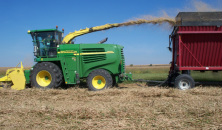
I led research work on how to most efficiently harvest biomass crops like corn stover, wheat straw, switchgrass, reed canrygrass, sorghum, and energy cane. Harvesting is the first link in the biomass logistics chain and an economical feedstock can only be achieved when this first step is done efficiently. Toward this goal, I mentored students and staff to modifyexisting equipment, invent new machines, and evaluate biomass harvesting systems. The research goal was to provide the least cost feedstock by harvesting biomass crops that have the desired physical properties while consuming the least energy.
BIOMASS STORAGE
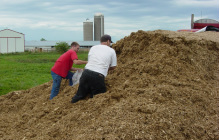
An important aspect of biomass logistics is how to conserve the value of the harvested feedstock during the storage period. Biomass demand is year round but it is harvested in a short period, so the ability to store and conserve its energy value for later use is critical. The storage research focused on systems and methods to minimize negative compositional changes during storage while incurring the least costs. This work included aerobic storage of dry feedstocks and anaerobic storage of moist feedstocks.
HAY AND FORAGE HARVEST AND STORAGE
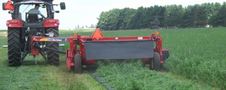
Wisconsin is America's Dairyland and in support of this vital industry, I led research projects on ways to produce and storage high-quality forage for Wisconsin's dairy cattle. This research included ways to improve ruminant animal forage utilization by mechanical processing, schemes to maintain round bale quality when bales are stored outdoors, and best practices for conserving bales by ensiling in film wrap. Other work has focused on wide-swath drying, large-square-bale conservation through use of preservatives, and new conditioning systems.
